Grief writing is one of the most essential parts of literature. It serves as therapy as well as a form of comfort, acceptance, healing, perhaps escapism for writers and readers, whether the writing is fictional or not. Directly or indirectly, literature has been one of the greatest ways of communication, it has been the voices of writers and readers.
Over the years, the Witsprouts Books have done an amazing job in publishing stories that explore issues that are reflective to human lives and existence generally. Witsprouts Books is committed to celebrating Africa’s literary brilliance and providing a platform for emerging writing talents. Previous anthologies include “The Year of Free Bird: Stories About Visually Impaired Protagonists,” curated by Basit Jamiu and “Twenty-20: Stories and Lessons from the Pandemic Year,” also curated by Tope Akintayo.
Witsprouts Books’ recent anthology is titled “Love Grows Stronger in Death” featuring 15 emerging African Writers. Mustapha Enesi and David Ben Eke are explored terminal diseases in grief writing in their short stories published in the Witsprouts Anthology, “Love Grows Stronger in Death.” This interview focuses on Mustapha Enesi’s Yesterday, Tomorrow and Today and David Ben Eke’s Where Swords and Missiles Fail in “Love Grows Stronger in Death”.
***************************
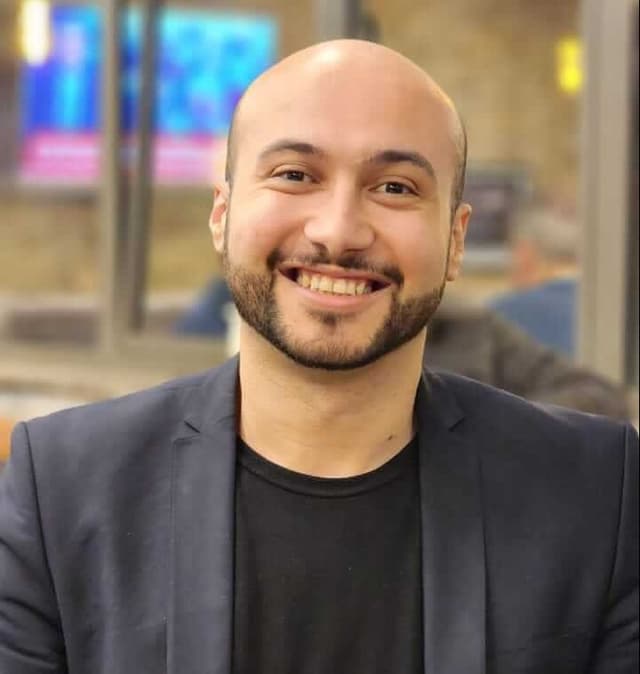
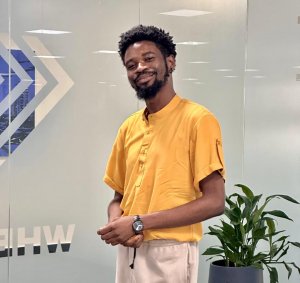
Mustapha Enesi is a multi-disciplinary Ebira artist from Okene whose works have appeared in several literary magazines. He is fascinated by the concept of human existence. The very fabric of his storytelling is centered on it, the delicate process of creation—sex, pregnancy, childhood, awareness, the complex realization of subconsciousness—and how all these phenomena crystallize as innate humanness. He is the joint winner of the 2023 Bridport Short Story prize (Young Writers Award) for his short story, One Good Thing.
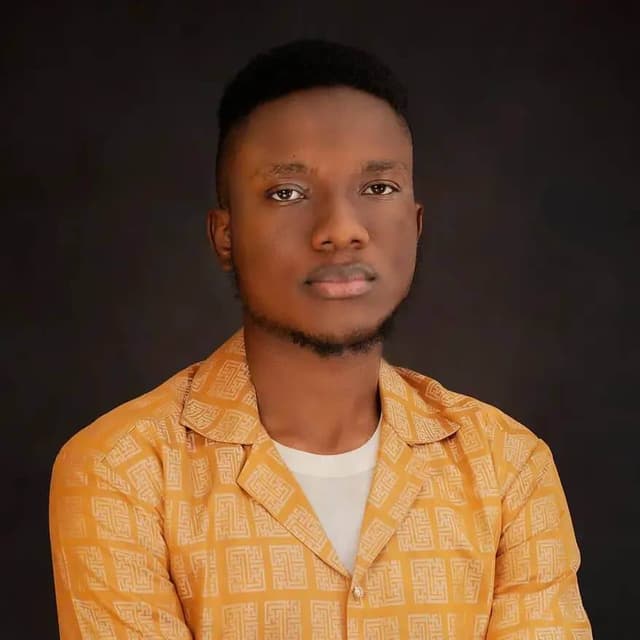
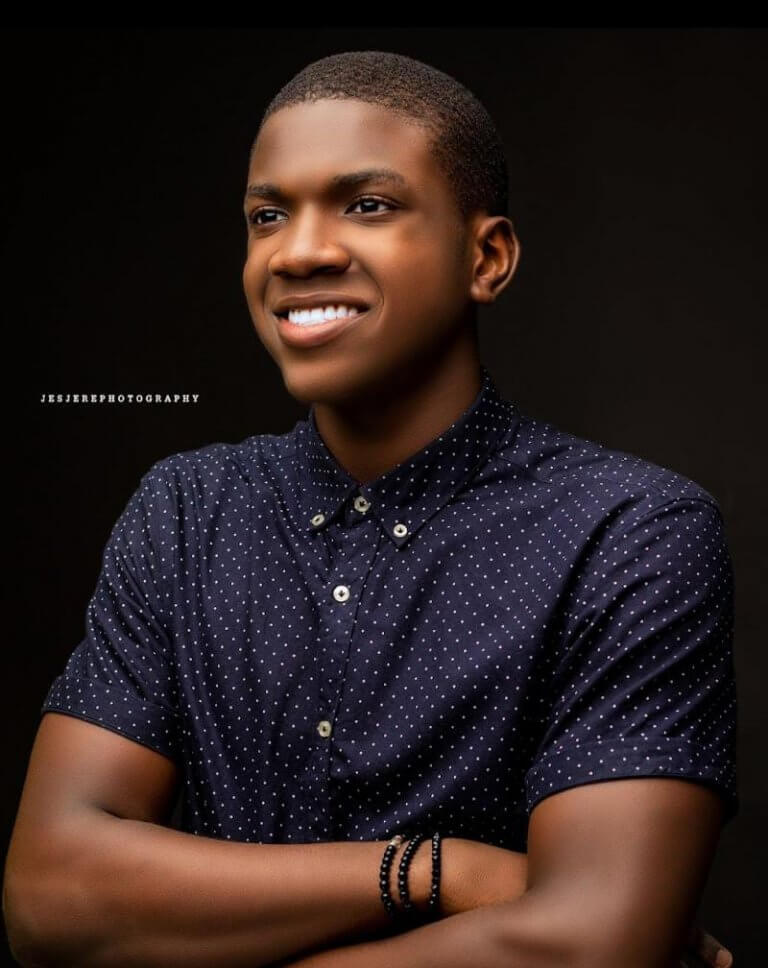
David Ben Eke is a writer from Rivers State, Nigeria. He is keen on spurring, through prose, poetry, and hybrid forms, deep love and care for the human creature. He writes for the love of God and man, and hopes his writing stirs same. His poem, ‘This One Spot’ was published in Olugbon Review’s ‘The People’s Stage’, his short story ‘Magic Words’ in Kalahari Review, and ‘Where Swords and Missiles Fail’, Witsprout Anthology.
“One Needs to Be Crazy to Be a Naked Writer” Mustapha Enesi
Haneefah: What does death mean to you as a writer and as a human ?
Mustapha : There are quite a number of meanings I have attributed to death from my life experiences.
As a human, it’s the physical separation of the body from this world. But it’s more than that to my writer self.
My writer self perceives death as the end of relationships. Like the witnessing of one’s parent’s divorce at a tender age. Like the glory stolen away from the hands of the oppressed by the oppressor. Death is the silence of a rape victim. It is the exploitation of the poor by the rich. It is the lies a narcissist weaves to benefit from the kindness of an empath. Death is the soulful wailing of women who had lost babies in the labor room. Death is the shifting of power in a community. It is the rise of an oppressive ruler.
I could go on.
Haneefah: I find the style of your story _Yesterday Today and Tomorrow_ to be oxymoronic and sort of contradicting. In the beginning of the story on the same spot she was seated, you wrote, “Here is a woman bereft of happiness.” and the end, where she died, seated on the same spot after her thoughts, you wrote, “- and, smiles, and tries to spread her arms and tries to reach them, but she feels herself grow solid, stiffening, happiness filling her mouth, and she shuts her eyes feeling complete” was this intentional or can it be analysed in another way? What is the story behind it?
Mustapha: I love how you took the time to read my story Haneefah. Thank you!
Yes it was intentional.
I try to make my stories have a beginning and an ending that is not necessarily obvious. I try to get a cycle of life in my stories, I learned this from reading Yiyun Li. I want readers to read my stories and feel like they know the main characters on an intimate level.
That way the emotions I am trying to elicit from my readers have a better impact.
I try to capture a semblance of life’s problems and obstacles in my stories. Because in life, one time one is happy and things are going well, and in a split second, one is sad and things are getting worse and worse and worse. And then happiness comes. Then sadness comes. Then happiness. And it’s a cycle. And life is a cycle. Life can begin and end in the same place.
In the beginning of my story, the character (unnamed) was bereft of happiness and did not feel complete as narrated by the narrator. Then we learned why she was unhappy as the story unfolded. She’d lived a traumatic life; a few losses and some wins. Though more losses than wins. And there she was feeling miserable. But she was not happy because she was focusing on the losses more than the wins.
That is why towards the end, she recalls all the good things that gave her liberation. You know, like how she wanted to divorce her husband. She realizes then that everything has been a burden and if she just let go, she will feel complete.
So, in the same spot she sat and thought about her sad life, she recalled all the good things that have happened in her life. And it was only then did she finally feel complete. She was longer bereft of happiness.
Perhaps, death is the letting go of sadness.
Haneefah: What is your last day of living thought process?
Mustapha: How have I imagined my life will end? Or how have I imagined my last day on earth will be?
I honestly do not know. I have not imagined it. And even as I type this, I am trying to imagine it and nothing is coming to my head.
I think that is the beauty of life for me. For one to be truly happy, one needs to let go. Live like it’s your last day on earth. Wake up every day and hit your goals. Be intentional. Eat healthy. Go out. Have fun. Laugh. Talk to your loved ones.
Find that place where happiness resides in your life and stay there.
Haneefah: Does death necessarily have to relate with grief?
Mustapha: There is no death without grief.
Grief is a natural response to death, but my understanding of death encompasses much more. However, through my experiences and as a writer, I see death as something more. Like how it represents the end of relationships and the profound emotional and societal shifts that come with it. So grief, as a response to death, reflects the deep, multifaceted losses experienced on a personal and on a collective level.
Haneefah: You weave words in such an expressive, original but yet imaginative way. My favourite phrase is from the description of the woman by her husband, Gregory, “vast shell of dreadful silence.” For someone who holds power in writing, what are the consequences that you consider should be attached to naked writing ?
Mustapha : I think naked writing frees the writer.
I have read about a lot of writers who do not share their stories until the stories are in their most polished versions, Alice Munro comes to mind.
Although, with covert writing, a short story writer may spend years writing a short story. I have never spent that long on a story. The longest I have spent on a story was three months. The shortest was 24 hours.
Naked writing makes me think of Harlan Elison. I read he used to write in bookstores, beginning a new story when the bookstore he wrote in opened up for the day. Then he would have it finished by closing time. As each page was completed, the bookstore would copy and post it in the windows. And he was okay with this. He was okay sharing the very first draft of his writing. Ellison said he did this to allow the public to “see what writers do”.
It also reminds me of Bridgerton, the story of Penelope Featherington and Collin Bridgerton. While Penelope, as “Lady Whistledown ” did naked writing, Collin was a covert writer.
Although, one could argue that Penolope was a covert writer because she wrote under a pseudonym.
I think one needs to be crazy to be a naked writer. And I mean this in a good way. In conversation with my friend, Olakunle Ologunro, he’d told me that one needs to be crazy to do this writing thing.
So yes, do naked writing if you want, it’s okay. And if you prefer being covert, then by all means, be covert. There are many ways to be a writer.
Haneefah: For as long as existence has been , mothers have been great contributors to a child’s mental health. The protagonist’s mother in your story _Yesterday, Today and Tomorrow_ contributed to her child’s mental health in a negative way. How would you define the relationship between mothers and their children in relation to mental health ?
Mustapha : The importance of a mother in moulding the mental health of a child cannot be overemphasized. Well, the father is not absolved. There are many strong bonds in the world in the relationship sense, but the mother-child bond is the strongest.
In religious books, we are told to honor, love and respect mothers more than fathers. There is no denying that the mother-child connection is unmatched. And I have many theories about this but that would be in another interview
I also have a theory about exploring mother-daughter relationships in stories. Jamaica Kincaid does this beautifully.
Haneefah: There is a psychological attachment to the furniture man who made her armchair; “wheels and rims and tubeless tires, built by the furniture man who lives just across her house; built for her condition” apart from the fact that he made the armchair for her condition . Why did you create the furniture man?
Mustapha: The furniture man is quite important for the plot of the story. He seemed insignificant at first read but his role in the story is heavy. It’s symbolism that captures the essence of a community.
Back in my village, one can easily step out of their house and buy tomatoes and pepper from neighbors.
That camaraderie creates a working communal atmosphere.
Haneefah: If you are to write an afterlife story about the woman who died in your story, _Yesterday, Today and Tomorrow. What would be the storyline?
Mustapha: Did she really die?
I don’t think she died though but what do I know? I mean, the narrator never explicitly told us that she died. The narrator said she felt complete at last. Perhaps, the narrator was referring to the main character’s death.
Or could it be that the narrator was referring to the effect of the main character letting go of her past traumas?
Haneefah: Your story reminds me of one of my favourite African American novels titled AS I LAY DYING by William Faulkner. Who are the writers that inspire you? Is Grief writing the only genre you are interested in?
Mustapha: I have a long list of writers who inspire me. If I mentioned them, this interview would not be over.
And no, grief is not the only genre I write about.
My stories explore minority voices in complex familial relationships, greatly shaped by my mother’s experiences.
I am fascinated by the concept of human existence, the very fabric of my storytelling is centered on it, the delicate process of our creation—sex, pregnancy, childhood, awareness, and the complexity of subconsciousness.
Maybe, this is a genre. I don’t know.
Haneefah: How has Witsprouts Books inspired the writing process of your contributing story?
Mustapha: One word to describe Witsprout: amazing!
Witsprout has profoundly impacted my writing career throughout the creation of LGSID anthology.
The supportive community Tope Akintayo is fostering is amazing. Tope is amazing.
Shoutout to the entire Witsprout team who have been invaluable in helping me add my voice to the African literary community. His dedication to promoting diverse voices and innovative storytelling has not only shaped my approach but also encouraged me to strive for excellence in every aspect of my writing journey.
And I love that African literature is booming! There is a wave happening within the African creative community and it’s so amazing to be alive to see.
Haneefah: Your story,_Yesterday, Today and Tomorrow_ share similar themes with David Ben Eke’s _Where swords and Missiles Fail_. What can you say about David Ben Eke’s story?
Mustapha : David’s story is one of my favorites in the anthology. I appreciate the simplicity and the honest exploration of the subject matter in his story.
He is an amazing writer with a theme that coincidentally connects with my story. It just makes me appreciate the power of writing and the Witsprout team for accepting our pieces for publication.
I should also mention that David and I started planning a few things since LGSID anthology came out. And I am glad to have been published alongside such an amazing creative.
“I Use Grief Writing to Find Language and Express Myself With the Found Language” David Ben Eke
Haneefah: How much connection would you say Mental Health and Writing have?
David: First of all, thank you for this interview and for the kind words you have had to say about my story, ‘Where Swords and Missiles Fail’. It is always a pleasure to have one’s work recognised and commended.
Connection between mental health and writing…I’m almost forced to philosophically theorise with this question and say there is a connection between mental health and every human endeavour: everything a human being does or produces, I daresay, simply reflects what he has experienced—real-time or vicariously—or remotely observed (without a strong impact on himself). I guess good writing would be writing that is able to evoke strong feelings, whether having lived the portrayed experience, felt the evoked emotions vicariously, or observed from a remote standpoint.
So, yes, I think mental health has a strong connection with writing, and I think this example from my life recently further buttresses my point: I watched Titanic, the movie, again, and after bawling my eyes out (again), I found myself writing a poem—a poem that reflected the state of mind the movie had put me in, a state of mind I hadn’t been in before I watched the movie. Also, I find that the kind of stories and poems that come out of me change as seasons of my life change: when I was heavily homesick, I wrote very nostalgic pieces; when I was mentally stressed, I wrote pieces crying out for help.
Haneefah: What inspired you to share your work on the Wisprout anthology titled LOVE GROWS STRONGER IN DEATH?
David: Witsprout anthology came highly recommended by a friend. I also had a story that was almost ready which perfectly fitted the theme, so I submitted. And the theme is deep; I love depth—because life and its rhythms (and death and its cruelty) are more than the bland, superficial motions of existence that we usually reduce them to.
Haneefah: Does love really grow stronger in death. How?
David: It does! You know that popular saying, ‘you don’t know what you have till it’s gone’. Exactly. The value of a thing or person is greatly revealed in their absence, and their absence creates a longing for them far more intense than that which was had when they were present or at least, accessible.
Now, bring this to the loss of a human being, and not just any human being, a human being you love. There is already a present love, already an enjoyment of their presence (when possible), and a longing to spend time with them—these are usually shortened or disturbed by other worries of life, jobs, school, etc, etc. Now, imagine these loved ones go. Imagine they go and never return—or at least, never return to this earth. It would be heart-rending, and love for them would be intensified, especially with reminiscence of moments with them, as spurred by the remaining encounters you will continue having on earth: just like the main character in my story, Terrence, kept being reminded of his late father and time with him by ordinary things he was seeing during his day, and just like he also kept imagining what he would have been doing with his friend had death not taken him.
Love truly grows stronger in death because we grieve the loss of what was and the unrealisation of what could have been.
Haneefah: Grief writing can be seen as a form of escapism irrespective of whether it is fiction or nonfiction. What does grief writing do for and to you?
David: I never intentionally set out to do any kind of writing. I just see, feel, and write. And indeed, writing about grief can be a form of escapism, but it is not lasting. No form of escapism—excessive drinking, smoking, wanton sex—is lasting. It’s all ephemeral. So, I don’t use writing for escapism from any feeling—or rather, I don’t replace healing with escapism. And I say this here because we currently live in an escapism culture, where people crave escape rather than healing.
I doubt if grief can ever be healed, but I think the most efficient mitigation for it is comfort, not escapism. And because death is transcendent—whether you believe in the existence of a spiritual realm like me, or you believe in any other kind of realm, there is a movement from being in the state we all live in now, to another state—comfort has to be sought in the transcendent.
Returning to the question, I do not use grief writing for escapism: I, instead, use grief writing to find language and express myself with the found language. We are expressive creatures, and are worse of (in every situation) when we can’t communicate what we are feeling and seeing. The feeling of grief is hard to express though. I remember asking a friend who had lost a close relative how he was feeling; he said something along the lines of ‘the pain is indescribable. I can’t even explain how I feel.’ I got the good idea of buying him Chimamanda Ngozi Adichie’s ‘Notes on Grief’, if not for anything, to simply give him the words to communicate how he was feeling.
And how does this help? you may be wondering. The answer lies in the popular saying, ‘a problem shared is a problem half-solved’. The problem may indeed not be solved. The grief, in fact, will not go away. But it will be less intense than before; the pressure on the chest from carrying that weight alone would have been lessened. So, I engaged in grief writing for the same reason I gave my friend Notes on Grief. To find language for the way I was feeling, and to express myself with the found language. All these, whilst reliant on the comfort from the transcendent.
Haneefah: There are other causes of death that you could have used apart from a terminal disease, Swords and Missiles of course. Why did you see the need to explore terminal disease in grief writing?
David: I lost a friend to a disease. I don’t know the name of the disease, but it was a disease (from what I heard).
I was also inspired to write this story after seeing a post mourning the death of a guy who was a friend to Lucy—Lucy is the name I’m giving my friend for the purpose of this interview. During Covid, Lucy regularly sent me Tiktok videos of herself and the individual who died. And when I saw the post mourning his death, I kept pondering how wickedly unpredictable life was, how the same being that had been doing the funny, crazy dance moves that were trending on Tiktok in 2020 would be, incongruously, lying lifeless in some mortuary.
I also thought about 2020: some people lost 2 to 3 loved ones and friends within that year… and, it was from these that the story was born.
Haneefah: The main character seems to have lost almost everyone, if not everyone dear to him. If the world is emptied of our beloved ones, do you think we can keep sane and live on?
David: I do think we can. With great difficulty, yes, but I do think we can. That was why I mentioned ‘comfort’ earlier, comfort from the transcendent. This earth and all of its emptiness, this earth with the many shiny things and lovely people we can easily get attached to, clearly grants only fleeting comfort, none of it ever lasting, none of it ever satisfactory. But if it has been created that way, then there must be a satisfaction, a comfort, that is accessible within its contours, but is transcendent—existing beyond the earth’s boundaries.
So, I think it’s most reasonable to get rooted in the transcendent, to get invested in the world beyond, and by doing so, gain hope, to keep going no matter what happens, and comfort, to keep sane. I know the world offers many options in this vane, so it’s up to us, individually, what we decide to take on board and believe. But I deeply believe in the offering of Christianity, as rooted in the bible.
Without a transcendent belief like this, I think despondency will be the next port of call—a kind of bland living, where a person becomes one with the empty motions of the earth, with a ‘living’ bereft of every zest and every life. And that wouldn’t be living anymore; that would be walking dead.
PS: I haven’t watched the movie, Walking Dead though. It looks scary…
Haneefah: The title of your story, _Where Swords and Missiles Fail_ is symbolic. What can you say about the numerous crises that have happened in Nigeria and its relationship with literature?
David: It’s crazy how one person can take all the crises Nigeria has taken, is taking, has undergone, and is undergoing. I started writing this story around the same period the Russia-Ukraine war began; hence, the title. I chose the title to reflect how we as a human race have, from ages past, easily resorted to swords and missiles and all kinds of weapons to resolve every issue. I also used that title to show how these weapons’ powers, nonetheless, pale in the face of death—as perpetrated by presently untreatable ailments like cancer. Isn’t it also ironic that those weapons perpetrate death but can’t save us from death itself? Yet, we go on killing one another…
Nevertheless, what my title-choice and the experience surrounding same shows is that literature is grossly impacted by the cultural and political sensibilities of the artist. So, I know and expect a torrent of literary pieces reflecting the madness in Nigeria’s terrain. Some random bursts have been let out, but even greater torrents are coming: torrents that will bemoan the present craze and cry louder than ever for change.
Haneefah: Would you say Terrence’s coping mechanism is Nonso even though he was dead?
I wouldn’t say Nonso. I would say memories of/with Nonso. I remember when I was in boarding school and I was homesick, I would sing the Indian songs from the zee world movies my cousin was obsessed with—every Nigerian guy who has a sister or female cousin would have been forced at some point to watch Zee World; I would ponder on simple things about my time at home, things I didn’t have in boarding school, like TV (even if I’m not a big watcher), like playing football with my brothers, etc.
It’s a coping mechanism, yes, and I think it evidences the brilliance of the human person—how we can go somewhere in our minds and live there, with the better, more positive emotions the life going on there evokes. I have a fictional story titled, ‘Magic Words’ published in Kalahari Review; there I explore the darkness in some boarding schools, and allow the character to dip into his past experiences for solace.
Haneefah: You used an Ekpeye folktale in the story. What is the role of the folktale in the story even though the story is set at a time when there are android phones, televisions and others?
David: Brief plot—Terrence’s mother is chronically ill with cancer; he’s on the way to the hospital, after receiving a call that she’s faring badly. The story mostly explores what’s going on in his head till he gets to her. One of the things going on in his head is the folktale. Ekpeye people, my people, have a whole festival, Ogwu Ekpeye, where young people gather around elders to listen to age-old folktales. This is still done today, and people like you and me with TVs and smartphones, still attend. It’s deeply ingrained in the lifestyle of many Ekpeye people although class may distinguish between those who continue in love with these folktales, and those who cast it away altogether, to be more ‘modern’.
Oh well, Terrence’s mother is also from a different generation and isn’t distracted by a need to look western, so she represents many Ekpeye mothers who still tell their children folktales. And those moments, because of how dear they are to the children, will always be remembered. So, Terrence remembered that folktale whilst considering the wicked possibility of his mother’s death. The folktale represents the moment most cherished between him, an Ekpeye boy, and his mother, an Ekpeye woman.
Haneefah: Your story, _Where swords and Missiles Fail_ share similar themes with Mustapha Enesi’ _Yesterday, Today and Tomorrow_. What can you say about Mustapha Enesi’s story?
David: I think Mustapha’s story is so well done. I read it more as the mourning of the protagonist’s death by the protagonist herself and Gregory, than as the mourning of those who died in the story—the babies/pregnancies—whose existence I, as a reader, I’m not sure of. I also really like that I’m not sure of the babies’ existence because the lines separating what is, reality, from what isn’t, mere imagination, are blurred by conditions like Alzheimer’s. This is why I think Mustapha did an amazing job.
Concerning what I said about the Protagonist and Gregory mourning the death of the ‘protagonist’, I’m referring to the death of the protagonist’s soul, as caused by her condition; the death of the ‘living’ person she once was and can no longer be—even though she still goes on ‘living’. Mustapha’s story confirms what I said earlier about being able to exist in our bodies on this earth, without truly ‘living’. He interpreted the theme ingeniously, and showed how grief is more about the loss of/inaccessibility to a soul, than a physical body. And his usage of the omniscient point of view also allowed us to see, not only from the protagonist’s lens, but Gregory’s; this made his piece more moving.
Haneefah: Somehow your story suggests a future that might take away everyone we love. How do you relate the future with storytelling?
David: Ewoo. I don’t wish to be a prophet of doom oo.
I wouldn’t say I was suggesting a future as dreadful as Terrence’s life experience; I was merely revealing the simple truth of that possibility. A human being just died now. And another human being just died now. You see…it’s happening…
And people lost many loved ones in 2020, for example. Lost some to Covid, lost some to cancer, etc, etc. I pray we do not lose any of our loved ones. But isn’t a prayer a fight in faith against a conceived possibility? And isn’t faith a wise surrender to the truth that we cannot fight everything? We can fight each other, we can fight some diseases, but what of cancer? What of death?
My story is a prayer, a lamentation, not a dark clairvoyance.
*************************
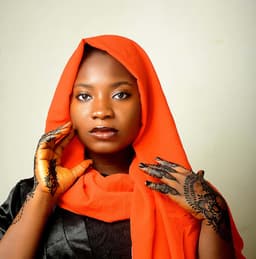
Haneefah Abdulrahman is a second class upper graduate of English Literature from Ahmadu Bello University, Zaria. She is a Writer, an editor, an Interviewer, a content creator, an arts event planner, a Spoken Poetry Artist and a Podcaster. She is a 2021 fellow of Ebedi International Writers Residency, Oyo State, a Pioneer Fellow of Imodoye Writers Residency, Kwara State and she was a Columnist at DailyTrust Newspaper. She is the Author of Shades of Becoming (a collection of short stories). She is the 2021 Winner of The Arewa Rising Literary Star. She has edited and curated books including anthologies. She also does freelancing writing for tech companies and others.
She is the Chairperson of Kaduna Branch Hill-Top Creative Arts Foundation. She was the 2021 – 2023 Chairperson of the Creative Writers’Club , A.B.U Zaria. Right from her first year in school, she has been a very dedicated member of the Club. She was the Treasurer in her second year and held the position of being the Financial Secretary and Editor 1 in her third year. The Creative Writers’ Club is known to be qualitative in picking their officials. She is also an arts administrator. She has organized many literary events including the Nigerian Poetry Festival.
Haneefah is the Editor-in-chief of Literature Voices (LITVO). She served as an Editorial assistant for The Moveee Magazine. She was shortlisted as one of the 30 Contemporary Women Poets to read by Poetry Column-NND in Nigerian News Direct. She was named YELF ARTIST OF THE MONTH, November Edition 2020. She was the 2019/2020 Business Head of Eagle’s View Tour and a Delegate for Conference Leadership Training of A.B.U for all ENACTUS Schools in Nigeria which qualified me as a Project Head. She has been invited as Guest Speaker, Judge and Panelist to Arts events like Benue Book and Arts Festival, Taraba State Schools Festival, National Library of Nigeria Readership Campaign, Yasmin El-rufai Foundation and more.
Over the past years, she has gained ample experience in the field of writing, public speaking, art events planning and organizing, researching and undertaking projects.
She is someone who is hard working, persistent, consistent, always ready to take challenges and learn new things.
You can reach her via abdulrahmanhanifah2017@gmail.com