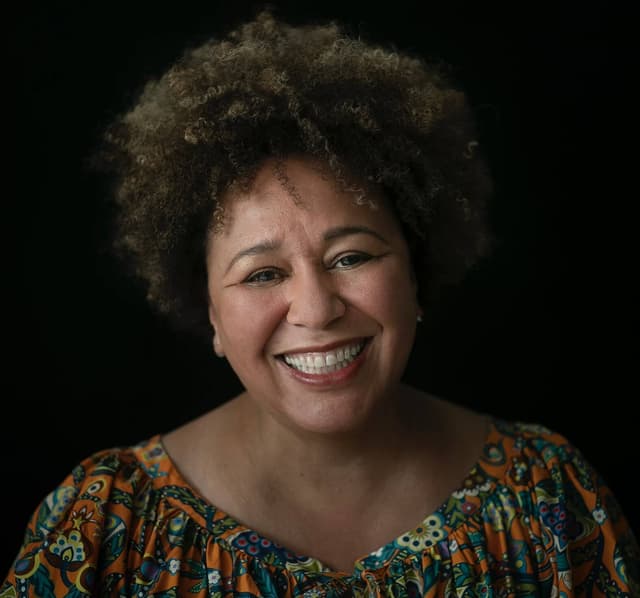
Ikenna Okeh is a Nigerian novelist whose work is distinguished by its engagement with migration, identity, and the shifting cartographies of African experience in the modern world. His international debut, Deportee (2022), interrogates the phenomenon of reverse immigration, drawing on narrative traditions that bridge Africa and its diasporas while opening new imaginative territories for the contemporary novel. Okeh’s critical and curatorial interests extend beyond fiction. In October 2024, he was the writer-in-residence at the Africa Center, Mexico. In that same year, he directed the Puebla International Literature Festival that hosted panel discussions seeking to bridge the cultural gap between African and Hispanic literary communities. He was a guest author at the Salon du Livre de Paris 2024, following the launch of the French translation of his novel, Rogues of the East, where his reflections on literary circulation and cultural translation contributed to ongoing debates about the global place of African writing. Currently residing in Antalya, Turkiye, he combines his literary vocation with creative work in film and audiodrama. Okeh’s practice is animated by a singular conviction: that African literature must not only tell stories but also reshape the contours of global readership, insisting on both its rootedness and its reach.
Haneefah: How did you start out as a writer ?
Ikenna: I think it all started when, at the age of eleven, I attempted to re-write stories whose endings I didn’t like. From then, I progressed to writing original short stories, but it irked me whenever any of my friends or my elder sister, by way of compliment, said, “you could be a writer.” I didn’t like writers because whenever I looked at the back cover of the books I read, the authors looked miserable in their bio. Most looked as though they were slaves to some vice surely not my idea of successful people. For this reason, I took conscious steps to alienate myself from writing. My only relationship with literature remained the kind that saw me as a reader. I went on to pursue studies in the Sciences and was well on my way to making something of a career for myself as a food scientist when I became aware of a growing void within me which only writing could address. One thing swiftly led to another, and now here I am.
Professionally, I think I started out as a writer in 2014 when I got selected, along with thirteen other emerging Nigerian writers, for the Caine Prize Short Story. Ellah Wakatama’s feedback on my short story gave me the endorsement that I needed to embrace this path. So, yes, looking back, that is how I started out as a writer.
Haneefah: Your book, They Killed Ahmet reminded many readers of classic thrillers by authors like James Hadley Chase. Was this intentional? Who are your literary influences in the thriller genre?
Ikenna: I was at the London Book Fair 2023 to practically hawk my crime novel, Rogues of the East. I had expended that much in resources to travel all that way and was out to achieve either the sale of film, translation, or any other adaptation rights. Though I was able to secure the sale of French rights, I was unsuccessful with film rights. However, the feedback I got from a film rights agent at the fair got me thinking. In the end, I came to realise I needed to provide pure literary entertainment: an easy read, something fast-paced, suspenseful, not bulky; something that a reader can finish in one sitting and feel entertained. Something like a James Hadley Chase novel. So, why not? After all, I read a lot of James Hadley Chase and Nick Carter novels, and I enjoyed them greatly. These two are my inspiration, so I set out to do something similar for Nigerian readers.

Haneefah: The title is striking, but also gives away a major plot point. Why did you choose to reveal Ahmet’s death upfront, and how do you think it affects the reader’s experience?
Ikenna- Ahmet is not such an important character in the plot, so I didn’t think making his fate titular would amount to giving away something of such consequence. According to the story, Fatma did what she did because the syndicate in Istanbul killed Ahmet. Ahmet’s death did not conclude the story; it offered a pivot for the plot. But then, who am I to decide for any reader or critic? I think all I can do is interact with their opinion through platforms such as this, see their perspective, and perhaps share mine.
Haneefah: Fatma is a strong, complex protagonist navigating patriarchal and societal constraints. What inspired her character, and what were you hoping readers would take away from her journey?
Ikenna: Truth be told, I didn’t intend for any readers to take anything away other than the feeling that they had just read the most entertaining crime fiction of their lives. I want them to see that African literature isn’t only about literary fiction; that there is also entertainment to be found in African literature. I have spent the past seven years living in enchanting cities across Europe and North America, and in that time I have come into contact with cultures and perceptions, all of which constitute the elements of the novels I write. Possibly, it is these cultures, these perceptions, that I want to share with my readers.
To answer your question directly, if you pay any attention to Türkiye, you are most likely to come across instances where issues of societal constraints constitute major discourses. At the top of these issues are femicide and other forms of gender-based violence. It is in light of this that I presented Fatma, a woman braving these constraints, a woman who has spent much of her time overseas, seen the world, and is making it safer for everyone else.
Haneefah: The novel deals with surveillance, control, and power dynamics. What drew you to explore these themes, and are they reflective of your observations of Nigerian society?
Ikenna: For the sake of new readers, let me clarify: the novel is set in Istanbul. The issue of surveillance is one that I treated with admiration. The Turks do not take their national security lightly. This is the reason Türkiye remains safe despite having a next-door neighbour in war-torn Syria. Compare it to Nigeria, where the government has no qualms openly blaming the rate of insecurity in the country on the influx of weapons and terrorists from faraway Libya.
Haneefah: Characters like Baki Mehmet and Collins add depth to the story. How did you approach crafting multi-layered characters with conflicting motivations?
Ikenna:It is life, or rather, an attempt at depicting life. If one is to capture a moment in time and attempt to tell it, they are sure to encounter multi-layered characters, all with conflicting motivations. Collins Kaduna is that Nigerian character for whom I felt sentimental. Like myself, he is an immigrant in Turkiye, experiencing Istanbul in his own tumultuous way. In order to breathe life and independence into each character, I needed to see the plot through each one’s eyes.
Haneefah: The book touches on real societal issues—police brutality, objectification, justice. How do you strike a balance between storytelling and social commentary?
Ikenna: I do not give these things any serious thought. This is me being entirely honest. I simply decide to tell a story and then I make sure to inject it into the midst of real issues. In doing this, I have had people close to me describe me as a social activist. Even Peter Hesen, my good friend, when he designed a website for me, came up with a header describing me as a social activist. The header is still up even though I don’t see myself as championing any form of activism. I am an artist, a writer, and I do living art.
Haneefah: The book cover is symbolic yet minimalist. What was the concept behind it, and do you feel it aligns with the tone of the story?
Ikenna: I left the entire book cover process in the hands of the graphic designer, Ewenike Chinedum, and my editor, Chidera Sylva Emmanuel. They both worked that magic. The compliments should be going to them. I hope they get to talk about the process themselves someday. For me, I am satisfied with it. It captures the essence of the story.
Haneefah: What was the most challenging part of writing this book, and what came most naturally to you during the process?
Ikenna:The prospect of writing about a woman felt daunting. One has to be careful about creating or reinforcing false notions, you know. And there remains the fear of triggering some nationalistic sentiment in some quarters. I live with that fear. It startles me whenever my phone rings or there’s an unexpected knock on my door. I guess writing serious crime fiction has its downsides.
The settings came naturally to me. I visit Istanbul often between trips and sometimes to see friends. So it was not much of a big deal writing about the steep, hilly streets and the general ambience of Istanbul. My friends will be proud.
Haneefah: How important was it for you to root this thriller in Nigerian realities? Did you set out to make a political statement, or did it emerge organically?
Ikenna:If any reader finds a political statement in They Killed Ahmet, they should reward themselves. They should exercise their finder’s rights over it, because there’s no telling how the political statement got there in the first place. Even the storyteller isn’t aware of its existence. It would be easier to get him to explain how water got into a coconut. All I did as the writer was craft a story for entertainment purposes.
Haneefah: Can readers expect more thrillers from you in the future? Are there themes or genres you’re interested in exploring next?
Ikenna: They Killed Ahmet is the first in the Fatma Ozdemir crime series. Book two, The Bloody Ones Come to Town, set in Antalya, is scheduled for release in late January 2026. In The Bloody Ones Come to Town, a missing cocaine shipment turns up on the coast of Antalya, and mafia organizations from Montenegro, Serbia, and Albania flock to the tourist city to stake their claim.
Readers will get to see their favourite characters again. I am also working on a cybercrime novel set against the coronavirus lockdown, during which the US government lost millions of dollars in COVID relief funds to scammers.
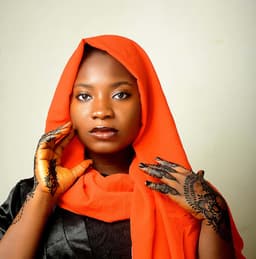
Haneefah Abdulrahman is a writer, interviewer, spoken poetry artiste and podcaster from Nigeria whose work has appeared in Nigerian Review, Wisprout Project, Arts MuseFair, and elsewhere. She is a 2021 fellow of Ebedi International Writers Residency, a Pioneer fellow of Imodoye Writers’ Residency, and she was a Columnist at DailyTrust Newspaper. She is the Author of Shades of Becoming. She is the 2021 Winner of The Arewa Rising Literary Star. Born in Kaduna, Haneefah is an indigene of Kogi State. She is a student of English Literature at Ahmadu Bello University, Zaria. Haneefah is the founder of FitzNArtz. She is the Chairperson of the Kaduna Branch, Hill-Top Creative Arts Foundation, the 2021/ 2022 Chairperson of the Creative Writers Club, Ahmadu Bello University, Zaria – Nigeria, the Editor-in-Chief of Literature Voices (LITVO) and the Editorial Assistant of the Moveee Magazine.