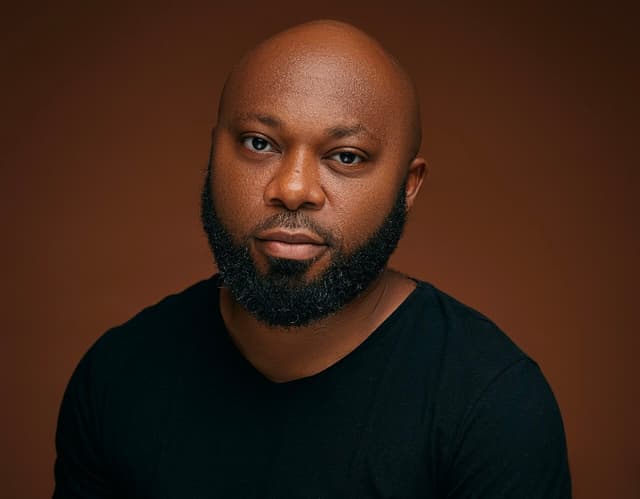
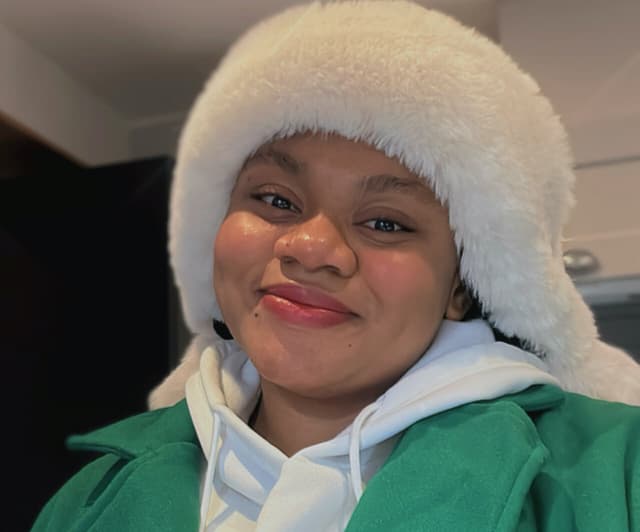
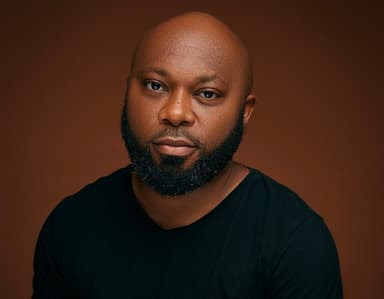
Born in Bristol and raised in Lagos (Corona School, Queens College, University of Lagos), Nikki May is Anglo-Nigerian and loves both her homes fiercely. Her critically acclaimed debut novel, Wahala, won the Comedy Women in Print New Voice Prize, was shortlisted for the Diverse Book Award and the Fingerprint Debut of the Year Award, and longlisted for the Goldsboro Glass Bell Award. It’s being turned into a major BBC TV drama series. This Motherless Land is her second novel. It was a Read with Jenna book in the USA, an NPR Book of the Year, wasshortlisted for the 2025 Edward Stanford Prize for Fiction and The Nigeria Prize for Literature. It is currently being adapted into a major TV series. Nikki lives in Dorset with her husband and visits family in Nigeria frequently. She should be writing but is probably reading.
Haneefah: Congratulations on being shortlisted for the Nigeria Prize for Literature. What does writing mean to you?
Nikki May: It’s complicated! Writing brings me great joy but it’s also hugely frustrating. The ‘fear’ is constant. Every time I sit down at my laptop, I worry I’ve forgotten how to write. It doesn’t get easier. But then when it comes together, when it works and the words flow, it’s like magic – the best feeling in the world. And to know I have two book babies out there in the world, being read by people I’ll never meet – well, that never gets old.
Haneefah: When you first put pen to paper, what inspired you to write, and do you remember the first thing you ever wrote?
Nikki May: I had a brilliant English teacher when I was about nine and he encouraged me to write poetry. I still have the little book of poems. At the time I thought I was the next Chinua Achebe – reading them back now, I cringe – they were awful!
I’ve always dreamt of writing a novel, but inspiration didn’t strike till I was fifty-five. I was on the way home from a long and loud lunch with friends at a Naija restaurant in London, when the idea for Wahala popped into my head. I wrote the first scene – three friends having lunch at a restaurant very much like the one I’d just left, and it snowballed from there.
Haneefah: In This Motherless Land, identity feels like a constant negotiation between England and Nigeria, race and culture, acceptance and rejection. How did your own experiences shape the way you wrote about this duality?
Nikki May: This Motherless Land is the book I was born to write – my lived experiences are on every page. A lifetime of code-switching between my two cultures – Nigerian and British – has made me obsessed with the concepts of identity and belonging, with the whole issue of HOME.
It’s a very personal book – when we met Funke in 1978 she’s basically living my life. She lives in my house in LUTH, Lagos. She rides my green Chopper around the quiet campus streets with her little brother, just like I did. She goes to my school. On the weekends, she goes to Tarkwa Bay, just like my family did. Her parrot, Billy, was my sister’s African Grey. Her father is a consultant at the teaching hospital, like my dad was. And her mother, Misses Lissie was much loved by my mother – who taught art at Corona School, Yaba, in the 70s and 80s and was adored by her students.
I lent bits of my life too. Her East Dulwich flat was my flat in London. She’s the same age as I was in 1978 and 1986 – and I drew on my party years when writing hers – although I should stress, I was never quite as wild as Liv!
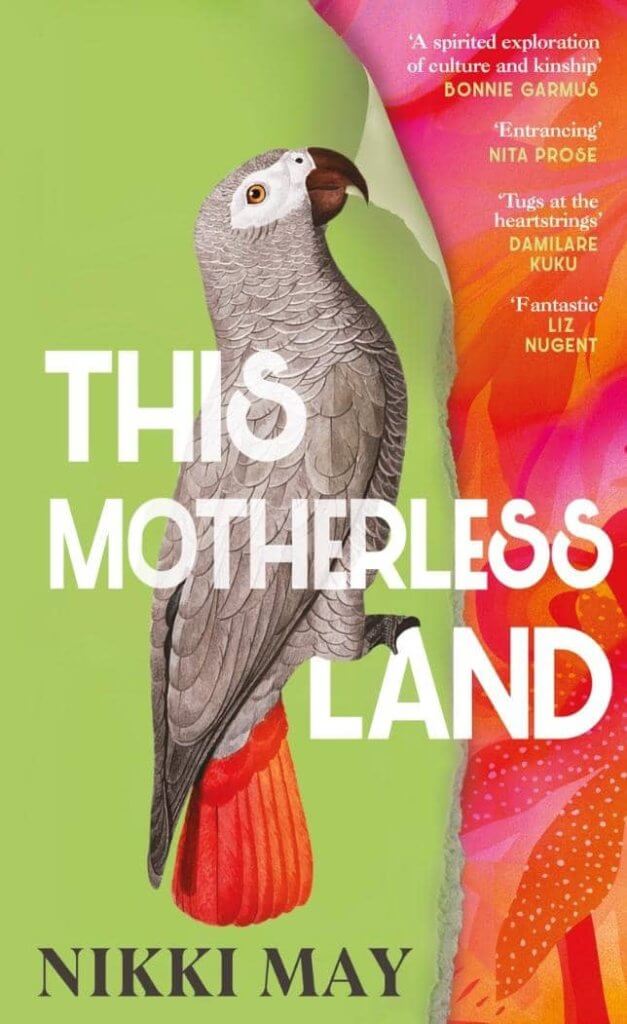
Haneefah: Loss, love, and family form the emotional backbone of the novel. Which of these themes felt the most personal to you and how?
Nikki May: Love. At its heart, This Motherless Land is a love story – just not the romantic kind. At heart, I’m a romantic and one of the things I wanted to explore in this book was whether love could make the difference between surviving and thriving. I think it can.
Haneefah: The book captures the “weight of being biracial.” What was the hardest truth for you to confront in writing about race and belonging?
Nikki May: The hardest truth is that these things are not black or white. It’s nuanced. And when you are writing about nuanced subjects like race, class, belonging and identity, the only way to be authentic is to be brutally honest. I know what prejudice feels like because I’ve experienced it – my maternal grandparents wanted nothing to do with me or my siblings because we were brown. I know what privilege feels like because I’ve lived it – I had a wonderful middle-class upbringing.
Being light-skinned has given me advantages and disadvantages in both. Identity is not a straight line – sometimes my sense of belonging is concrete, other times it’s elusive. These things are nuanced, and I wanted to reflect that in my book.
Haneefah: Your writing has been described as both authentic and lyrical. How do you balance honesty with beauty in storytelling?
Nikki May: I love language, I’ve always been delighted by how words can be manipulated into joy. I start with the story – get that down, get it right. And then I try to make it pretty – to say things in a way that delights the eyes and ears. It’s hard work. By the time my book gets to the printers, it’s on version twenty! Edit, edit and edit again.
Haneefah: The cultural textures, like references to aso-oke, make the novel vivid. How did you decide which cultural details to highlight for readers unfamiliar with Nigerian traditions?
Nikki May: I just chose the references I love the most! I’m a terrible seamstress but whenever I come home, I buy yards of ankara and aso-oke. One of my most prized possessions is a chair that’s upholstered in pink and yellow Vlisco! I’m also a big foodie – so food always makes it onto my page. Writing makes me hungry!
Haneefah: Patriarchy and prejudice weigh heavily on the characters. What conversations do you hope the book will spark around gender and identity?
Nikki May: Prejudice is universal, unfortunately. I’ve experienced it in both my homes. And unfortunately, the patriarchy is alive and well in both my homes too. I think it’s human nature – we seem determined to find disparity and exploit it. Like my character, Oyinkan says to Funke – ‘Any difference will do – sex, color, tribe, religion, whatever. I’m yet to meet a good “ism”.’ We all live in denial of course – refusing to acknowledge our prejudice, refusing to own our privilege. But in my experience, it’s ubiquitous.
In This Motherless Land, I try to mock the irrationality and ridiculousness of prejudice and patriarchy. I had so much fun turning the pity project into the best of them. Making Funke strong and giving her privilege was joyful.
Haneefah: If a reader could walk away with one lingering message from This Motherless Land, what would you want it to be?
Nikki May: I set out to entertain when I write, I don’t want to preach, I want people to laugh, gasp and maybe even cry. But if it makes one person question their prejudice or own their privilege, that would be a huge bonus.
And at least once a week, a reader reaches out to me on social media, telling me my book has made them want to visit Lagos – that makes me very happy.
Haneefah: How do you see your work evolving beyond This Motherless Land? Are there stories you feel compelled to tell next?
Nikki May: I’d like to say writing gets easier with each book, but I’d be lying! Writing is always hard. I’m currently working on my third book, and I’ve discovered a new ‘ism to get exercised about – ageism! I turned sixty in April, and it’s made me think about age. It seems to me there is no good age to be a woman.
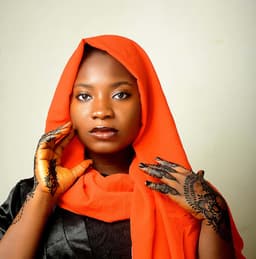
Haneefah Abdulrahman is a writer, interviewer, spoken poetry artiste and podcaster from Nigeria whose work has appeared in Nigerian Review, Wisprout Project, Arts MuseFair, and elsewhere. She is a 2021 fellow of Ebedi International Writers Residency, a Pioneer fellow of Imodoye Writers’ Residency, and she was a Columnist at DailyTrust Newspaper. She is the Author of Shades of Becoming. She is the 2021 Winner of The Arewa Rising Literary Star. Born in Kaduna, Haneefah is an indigene of Kogi State. She is a student of English Literature at Ahmadu Bello University, Zaria. Haneefah is the founder of FitzNArtz. She is the Chairperson of the Kaduna Branch, Hill-Top Creative Arts Foundation, the 2021/ 2022 Chairperson of the Creative Writers Club, Ahmadu Bello University, Zaria – Nigeria, the Editor-in-Chief of Literature Voices (LITVO) and the Editorial Assistant of the Moveee Magazine.