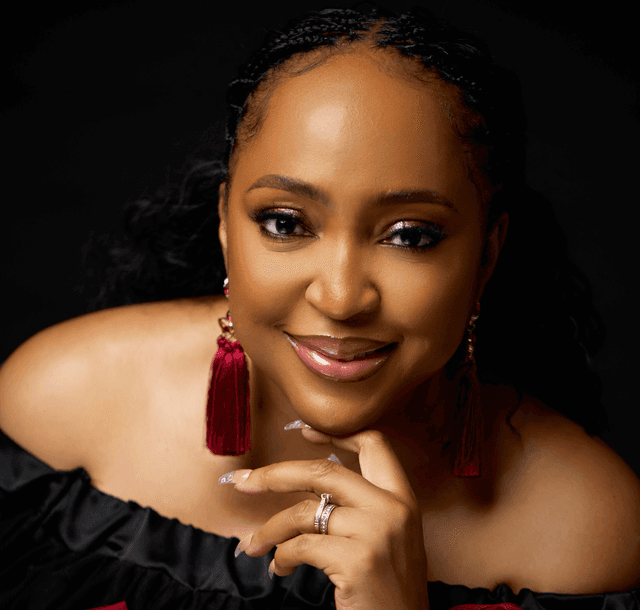
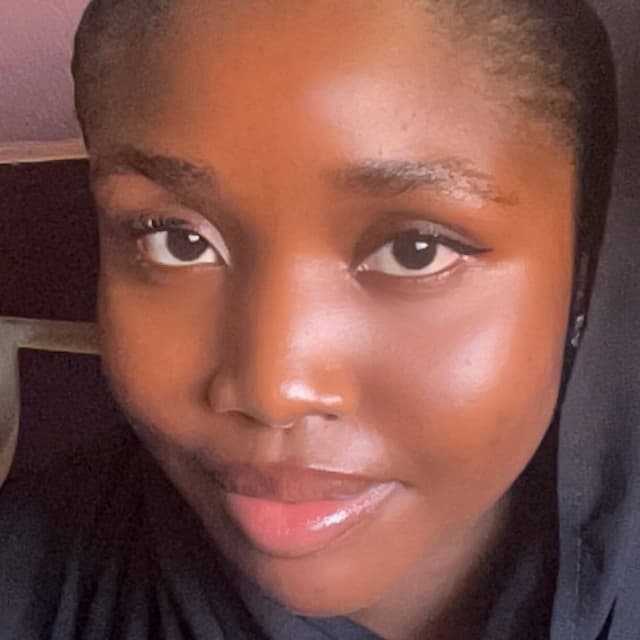
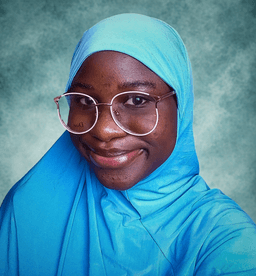
Azizah Idris M. MCPN , grew up in Gombe, Nigeria. She holds an MSc. in Computer Science from the Abubakar Tarawa Balewa University, Bauchi and an MSc in Islamic Psychology and Counselling (in view) from International Open University, Gambia.
A bi-lingual writer, Azizah has written nineteen Hausa language novels including Zubar Kwalla, Halin Girma and Maimaita Tarihi as well as a cookbook in English titled My kitchen Essentials and seven other English novels.
She is also a Muslim Marriage Counsellor who has coached over 4000 women online and offline.
Azizah is currently Head of ICT Gombe State Muslim Pilgrims’ Welfare Board in Gombe, where she lives with her husband and four young children.
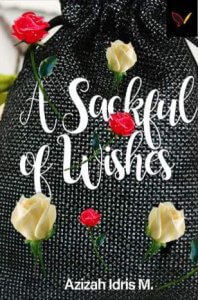
Mahmoodah: Thank you for granting me this interview. While reading “A Sackful of Wishes” I was so afraid that it was someone’s true story being told under the guise of fiction. What was the inspiration behind this masterpiece?
Azizah M. Idris: Thank you so much for this opportunity, Mahmoodah — it’s truly a pleasure to be here. (laughs) Your intuition isn’t far off at all! In fact, A Sackful of Wishes was inspired by real-life events. While counselling the woman who inspired Hadiza’s character, I felt that her story was too powerful and poignant to remain untold. With her permission, I began weaving it into fiction. The pain, the struggleshg, and the journey to healing that Hadiza experiences were drawn from this woman’s own life, and as difficult as it was to believe at first, it sadly reflects the reality many women face.
Abdulrazaq’s character is meant to shed light on the often misunderstood and overlooked impact of mental illness, not just on the individual, but on their relationships as well. It’s something that can easily go unnoticed in many marriages, but the effects are profound. By the final book, the truth will come to light, and I hope readers will gain a deeper understanding of how such struggles can shape a person’s actions and impact those around them.
Mahmoodah: I perceived Hadiza’s maiden family as condoning the old narrative that women should quietly endure suffering in their marriages. What would be your advice to the women of today who have been or are going through the same?
Azizah M. Idris: You’re absolutely right to perceive Hadiza’s family as holding on to that old narrative, where women are expected to quietly endure suffering in their marriages. This mindset has been a part of many cultures for generations, but it’s important to recognize that times are changing, and so is our understanding of healthy relationships.
To the women of today who are going through similar struggles, my advice would be this: don’t silence your pain. It’s okay to acknowledge that you’re hurting, and it’s okay to seek help. Enduring abuse, emotional neglect, or any form of suffering in silence is not a virtue, it’s a burden that weighs heavily on the soul.
In Islam, marriage is meant to be a partnership of love, mercy, and mutual respect. If those principles are missing, it’s essential to speak up, seek counselling, and consider the options available to you. Your well-being matters. There is no shame in seeking help, whether it’s through therapy, reaching out to trusted family or friends, or even turning to a professional marriage counsellor.
Women are not meant to suffer silently. Allah, in His infinite wisdom, has provided ways to navigate hardship, and you deserve peace, love, and respect in your marriage. It’s important to remember that healing and growth are possible, but they require courage, the courage to stand up for yourself, to demand respect, and to seek the happiness you deserve.
Mahmoodah: The “love” between Inna Binta and Mallam Musa was such wherein the suffering outlived the joy they enjoyed in their togetherness. In today’s world, do you think such love can thrive?
Azizah M. Idris: In today’s world, the dynamics of relationships have shifted. We live in a time where people are more aware of their emotional health and well-being, and many are no longer willing to endure unhealthy relationships for the sake of “love.” However, the core of a successful, lasting relationship, whether in the past or today, still lies in mutual respect, trust, and the ability to grow together through challenges.
In the modern world, love can certainly thrive, but it requires a foundation of understanding, communication, and self-awareness. Both partners need to be willing to work through difficulties rather than letting them fester into resentment or emotional harm. Healthy love in today’s society is one where both individuals value each other’s well-being, make efforts to maintain peace, and are open to seeking support when needed.
So, while the love between Inna Binta and Mallam Musa is tragically beautiful, I believe that in today’s world, love can and should thrive but only when it’s nurtured with emotional maturity, care, and the willingness to address problems before they become insurmountable.
Mahmoodah: The narrative currently is that, for women, being financially stable before getting married would give more comfort. If you were to tweak Hadiza’s character such that she had completed her education and attained financial stability before marriage, would you have let things pan out differently in her marriage to Abdulrazaq?
Azizah M. Idris: As I menthnioned earlier, Hadiza’s story is deeply inspired by real-life events. While the idea of financial stability and education before marriage is often seen as an ideal foundation for many women today, Hadiza’s story wouldn’t exist if her journey were different. If she had achieved financial independence and completed her education before marrying Abdulrazaq, the circumstances of her marriage might have been different, but it wouldn’t change the fundamental challenges she faced.
The truth is, financial stability and education don’t guarantee immunity from the emotional or psychological struggles that can arise in marriage. Many women, even those with solid careers and financial independence, still find themselves in difficult marriages, sometimes with mentally unstable or abusive partners. It’s a harsh reality that many women face, and no amount of preparation can fully shield someone from the complexities of human relationships.
Hadiza’s story highlights the emotional and psychological toll of being in a troubled marriage, especially when the partner struggles with mental health issues. It’s a reminder that while financial stability is important, it’s equally essential to focus on emotional and mental health both individually and within relationships. If Hadiza had the chance to prepare differently, perhaps her approach to her marriage might have been different, but the core challenges many women face, regardless of their financial standing, would likely remain.
Mahmoodah: Like in Mama Mairo’s case, we see, sadly, how physical disabilities could debar people from making meaningful personal relationships. It’s a poignant reminder of the tough world we live in. How do you think persons with disabilities (PWDs) can overcome this problem?
Azizah M. Idris: Mama Mairo’s difficulty in forming personal connections or her extreme jealousy wasn’t necessarily a direct result of her disability, but rather stemmed from deeper, more complex emotional struggles. While physical disabilities can present real challenges in relationships, the underlying causes of bitterness or difficulty in forming bonds are often rooted in personal history, unresolved trauma, or societal treatment, not simply the disability itself.
There are many individuals with disabilities who are kind-hearted, loving, and capable of forming meaningful relationships. The key is to address the emotional and psychological aspects that may arise from feeling isolated or misunderstood, as this can lead to internal struggles. Mama Mairo, for example, didn’t share laughter with her children or husband, perhaps her silence came from a deeper, unspoken pain, one that no physical limitation can fully explain. Who knows, laughs, maybe we’ll find out more about her in the future.
As for individuals with disabilities (PWDs), it’s crucial that society offers more spaces for acceptance, understanding, and emotional support. PWDs can overcome the barriers to meaningful relationships by focusing on their self-worth and seeking environments where they feel valued beyond their disabilities. Therapy, community support, and open communication with loved ones can also help PWDs navigate these challenges. Most importantly, PWDs should be encouraged to express themselves freely and build connections based on mutual respect, shared values, and love, just like anyone else.
Mahmoodah: By your submission in the book, are you agreeing that women sometimes subject themselves to unhappy marriages to show filial piety?
Azizah M. Idris: That’s an insightful question. In A Sackful of Wishes, I explore the complexities of relationships and the societal pressures that many women face. It’s true that, at times, women may feel compelled to endure unhappy marriages out of a sense of filial piety, loyalty, or duty, especially in cultures where the sanctity of marriage is highly revered. This can happen when women feel that their commitment to their families whether it’s their parents, children, or even their community outweighs their own emotional or mental well-being.
However, while I understand the desire to honour familial obligations, my stance is that no one, man or woman, should have to suffer in silence. Marriage is meant to be a partnership based on mutual respect, understanding, and love. When these elements are missing, it doesn’t serve the purpose of marriage, and it certainly doesn’t serve the individual’s overall well-being.
That said, I don’t want to suggest that filial piety is wrong, but it’s important to note that we must balance our duties to others with the need for personal fulfillment and self-care. In a healthy marriage, both partners should support one another’s happiness and growth. I hope that women, and people in general, understand that seeking happiness and peace within a marriage or even choosing to leave an unhealthy one is not a betrayal but an act of self-respect.
Mahmoodah: Hadiza married very young. Do you think her age was an influence on her choice and what she looked out for in a partner at the time?
Azizah M. Idris: Yes, Hadiza was very young when she married, and her age certainly played a role in her decision-making process. At that point in her life, she was deeply influenced by the cultural norms around her. In her family, girls were often married off as soon as they completed junior secondary school. While Hadiza loved her education and wanted to continue, she was acutely aware that it might be abruptly cut short much like it had been for her half-sisters.
At that young age, Hadiza fell in love with the idea of marriage more than the reality. She was drawn to the dream of companionship, the promise of love, and the desire to please her family and society. But the reality of marriage came with emotional and psychological challenges that she wasn’t fully prepared for. She had envisioned marriage as a step forward, but she wasn’t ready to navigate the complexities that came with it.
In choosing a partner, Hadiza wasn’t necessarily looking for someone who would be her emotional rock she was more focused on the idea of security, family expectations (especially with her father’s debt and all), and what was expected of her at that stage in her life. So, while she desired love, she also wanted to ensure her place within her family’s cultural framework, which left her unprepared for the true demands of a marital partnership.
Mahmoodah: There has been an outrage for the law criminalising marital rape—as experienced by Hadiza in the book and by other women in reality—to be implemented and enforced in Nigeria. What’s your take on this?
Azizah M. Idris: This is indeed a very complex and sensitive issue, and there are many differing opinions regarding the criminalization of marital rape, especially in societies like Nigeria, where cultural and religious beliefs can deeply influence perspectives on marriage. On one hand, there is a broad consensus that it is wrong to force any partner into intimacy against their will. No one should be coerced or made to feel unsafe or uncomfortable in their relationship, whether inside or outside of marriage.
However, some people have difficulty with the term “rape” within the sanctity of marriage, particularly because of beliefs that marriage involves a certain level of obligation between partners. In some interpretations, there is a belief that once a couple is married, the concept of consent becomes secondary to the commitment and responsibilities that come with the union. This view is deeply rooted in cultural and religious norms, which complicates the discussion about what constitutes abuse within marriage.
At the same time, it is important to acknowledge that forcing intimacy, whether in or out of marriage, is a violation of a person’s autonomy and rights.
The prophet SAW instructed men to send a messenger to their wives before they become intimate with them. Prophet SAW said: “None of you should come on to his wife like an animal, but rather there should be between them a messenger.” It was said, “What is the messenger, O Prophet of Allah?” He replied, “Kisses and sweet words”. This hadith explains how a man should approach his wife.
There is an urgent need to shift the narrative that marriage should be a partnership built on mutual respect, understanding, and consent. The law must evolve to protect individuals in all relationships, recognizing that marriage is a contract of mutual respect, not ownership or entitlement.
For Hadiza and many women in similar situations, marital rape is a harsh reality, and it’s vital for society to understand that no one, no matter their marital status, should have their autonomy or dignity violated. There needs to be legal and cultural shifts that emphasize healthy, respectful relationships while holding perpetrators accountable for their actions
Mahmoodah: In the book, Abdulrazaq’s vindictive nature was assumed to be the result of childhood trauma from being emotionally abused. Do you agree that childhood trauma creates broken adults who essentially go on to break more people in society, or are there other factors influencing our adult behaviours?
Azizah M. Idris: Yes — childhood trauma can create emotionally wounded adults who, if unhealed, often project their pain onto others. However, adult behaviour is also shaped by personal choices, beliefs, environment, and mental health. Trauma isn’t destiny, but if ignored, it can become a cycle that damages others.
Mahmoodah: Hadiza’s show of empathy, in trying to save Abdulrazaq before saving herself from the hell their marriage was felt like a suicide mission to me. What made you inject that bit into the story?
Azizah M. Idris: Hadiza is naturally empathetic, it’s in her nature to care for others, whether her children, siblings, or even a broken husband. That moment showed the depth of her humanity, even in the face of her own suffering.
Mahmoodah: Is it ever safe to believe like Hadiza, that one can change their partner’s behaviour after marriage, especially one who exudes manic and Obsessive Compulsive Disorder (OCD) tendencies like Abdulrazaq?
Azizah M. Idris: No, it’s unsafe to believe you can change a partner after marriage, especially one with untreated mental health issues like Abdulrazaq. People can only change if they acknowledge their problems and willingly seek help. I always say this to my counselling clients, love alone isn’t enough.
Mahmoodah: Was it your intention from the onset to make this a trilogy, or did you come up with the other books once the idea of the first had been established?
Azizah M. Idris: The book originally started as a Wattpad series and ran too long. When it was time to publish, I had to choose between cutting out a significant part of the story or dividing it into parts and that’s how the trilogy was born!
Mahmoodah: Should we be expecting a new masterpiece from your end anytime soon?
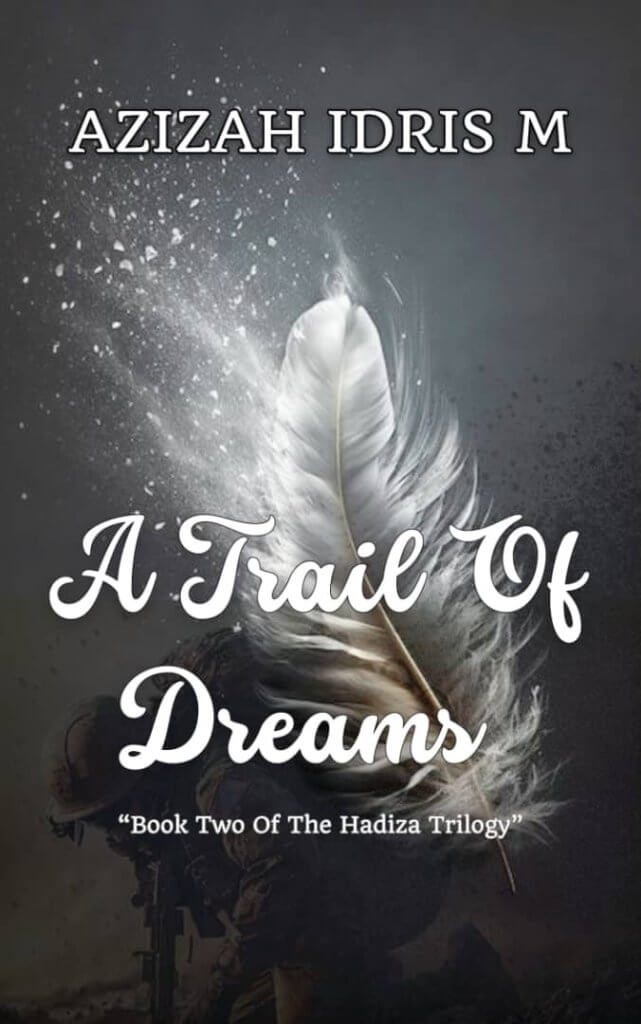
Azizah M. Idris: Hahaha yes! After releasing the second part of the trilogy, A Trail of Dreams, last year, you can look forward to the final part early next year, in sha Allah. Plus, I have two more books coming — The Mechanic’s Wife in the last quarter of 2025, and Withering Petals by August 2026, in sha Allah.
Mahmoodah Oyeleye is a freelance writer, and the author of Faded Blues. She is a member of the Hilltop Creative Arts Foundation. She writes from Lagos, Nigeria.