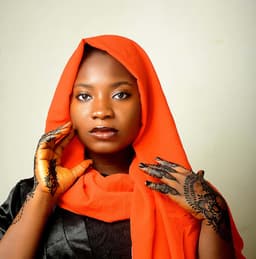
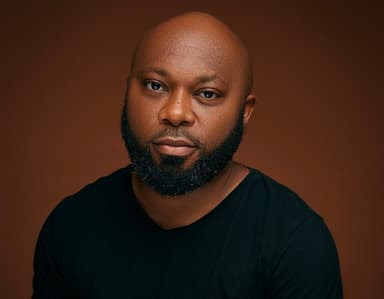
Qudrah Adam is a writer who lives in Abuja, Nigeria, with her family. As an ambivert, she enjoys solitude, often spending time on solo dates and pursuing her passions for writing books and poetry. Kudirat Adam is her official name, though she believes “Kudirat” to be a clerical mistake by the doctor who registered her birth. Qudrah aspires to become a lecturer and is currently pursuing a degree in Educational Administration and Planning at the university. “Broken Dreams” is her debut novel, and it marks the beginning of an exciting series: The Billionaire Broken Series.”
Haneefah: What personal experiences or emotions drove you to write BROKEN DREAMS?
Qudrah: My motivation to write “Broken Dreams” wasn’t rooted in a specific personal experience but rather a deep desire to share authentic stories that reflect Islam and feature relatable Islamic characters. I wanted to create a narrative that resonates with others, fostering understanding and compassion for a culture that is often misunderstood.
Haneefah: How did you come up with the title “BROKEN DREAMS”, and what significance does it hold in relation to the story?
Qudrah: The title “Broken Dreams” reflects the essence of the story, even if some may feel that dreams were not truly broken. It carries deep meaning for me because it centres around two individuals who had hopeful dreams of being with someone they loved, only to face the sorrow of lost love. I understand that not everyone may resonate with this title, and that’s completely valid. It highlights the complexity of love and loss, which is a theme that many can relate to in their lives.
Haneefah: You mentioned creating a romantic character unlike anyone you’ve met. What inspired Aimar Ali’s personality, and how did you balance his flaws with his redeeming qualities?
Qudrah: Aimar Ali is a character like no other, embodying a unique blend of imperfections that make him profoundly relatable. It’s these very flaws that contribute to his humanity, and I believe they are what make him exquisite in his own right. Navigating through his weaknesses was challenging, yet it became a vital part of my story, ultimately paving the way for his heartfelt redemption.
Haneefah: Does Aimar Ali embody your ideal partner, or did you intentionally craft him to defy traditional romantic heroes?
Qudrah: Though Aimar might be a good man, he doesn’t fully embody the traits I’d want in my ideal partner. My ideal partner will not be rude to me at first. Lol.
Haneefah: Aimar’s transformation is a pivotal aspect of the story. Can you elaborate on the emotional journey you envisioned for him and how you measured his growth throughout the narrative?
Qudrah: I envisioned Aimar as a character who struggles to respond appropriately to situations. He is a man who doesn’t quite know how to react to events around him. The loss of his first wife deeply affected him, and I wanted him to reflect on that grief. I gauged his development by examining his flaws and actions throughout the story.
Haneefah: How do you think Azrah’s heartbreak would have differed if Sameer had abandoned her instead of passing away? Would the emotional impact have been more intense or prolonged?
Qudrah: I am going to give a sincere response: if Sameer had abandoned her instead, it would have been worse, and as the author, I’d make her still marry Aimar Ali. The emotional impact would be more intense, in my opinion, because he willingly abandoned her.
Haneefah: Aimar’s perception of Azrah’s “perfection” raises questions about the nature of flaws and imperfections. How do you think these concepts shape our understanding of ourselves and others?
Qudrah: This is where we all misunderstood. Azrah isn’t perfect, even though Aimar often views her that way. She has her flaws. For instance, there’s the moment when she ignored him while he tried to explain his reasons for leaving her in Italy.
Haneefah: What traits did you aim to instil in Azrah’s character, and how did you develop her resilience in the face of adversity?
Qudrah: I aimed to instill determination and emotional depth in Azrah’s character. Her resilience developed through adapting to difficult situations, ultimately revealing her inner strength and growth.
Haneefah: Aymah brings a sense of innocence and joy to the story. How did you balance her presence with the more sombre themes, and what role did you intend for her to play in the narrative?
Qudrah: It was hard to fit Aymah into the whole story. At one point, I felt like scraping out her character. But like you said, her character brought innocence and joy into the story, so it was hard to do.
I intended for her to play the role of the character that bonds Aimar and Azrah together.
Haneefah: The bonds between female characters are a highlight of the book. Can you discuss the importance of these relationships in your life and how you sought to portray them authentically?
Qudrah: Female friendships are really important to me. They’re a source of support, love, and understanding. In my life, these relationships have helped me through tough times and celebrated with me in the good times. When I was writing BROKEN DREAMS, I wanted to show how these friendships can be real, messy, and beautiful. I hoped to capture the way women can lift each other up and be there for one another. Shout out to my friends Rahmat Adam, Zainab Abdul, Zainab Hassan & Ramlah Yusuf. I love you all.
Haneefah: How do you engage with your readers and the writing community, and what value do you place on these connections in your writing journey?
Qudrah: I engage with readers and the writing community through social media and online forums. These connections are invaluable to me, as they provide support, feedback, and motivation. They help me stay connected to my audience, learn from fellow writers, and grow as a writer.
Haneefah: If you were to set a romantic novel in a historical era, which period would you choose, and what would be the central conflict or theme?
Qudrah: I’d set a romantic novel in the Regency era (late 18th to early 19th century) in England. The central conflict would revolve around social class differences and the restrictions placed on women during that time.
Haneefah: Which Muslim authors have influenced your writing, and how have they shaped your approach to storytelling?
Qudrah: I hold great admiration for Tahira Mafi. Although we write in different genres and create distinct worlds in our novels, her work has profoundly influenced me in numerous ways. I truly appreciate the impact she has had on my writing journey.
Haneefah: Did you grow up reading Kano market literature or “Soyayya” (love) literature, and if so, how did these stories impact your writing?
Qudrah: I’ve read many Northern love stories on Wattpad, and they have had a significant impact on my writing journey. They taught me that we can also write about our society, particularly northern society.
Haneefah: What can readers expect from the upcoming instalments in the BROKEN DREAMS series, and how will you continue to develop the characters and their relationships?
Qudrah: Readers can expect more intense drama, unexpected twists, and deeper character development. The upcoming instalments will explore the characters’ struggles, relationships, and personal growth, with new challenges and conflicts that will test their bonds and force them to make difficult choices.
Haneefah Abdulrahman is a writer, interviewer, spoken poetry artiste and podcaster from Nigeria whose work has appeared in Nigerian Review, Wisprout Project, Arts MuseFair, and elsewhere. She is a 2021 fellow of Ebedi International Writers Residency, a Pioneer fellow of Imodoye Writers’ Residency, and she was a Columnist at DailyTrust Newspaper. She is the Author of Shades of Becoming. She is the 2021 Winner of The Arewa Rising Literary Star. Born in Kaduna, Haneefah is an indigene of Kogi State. She is a student of English Literature at Ahmadu Bello University, Zaria. Haneefah is the founder of FitzNArtz. She is the Chairperson of the Kaduna Branch, Hill-Top Creative Arts Foundation, the 2021/ 2022 Chairperson of the Creative Writers Club, Ahmadu Bello University, Zaria – Nigeria, the Editor-in-Chief of Literature Voices (LITVO) and the Editorial Assistant of the Moveee Magazine.