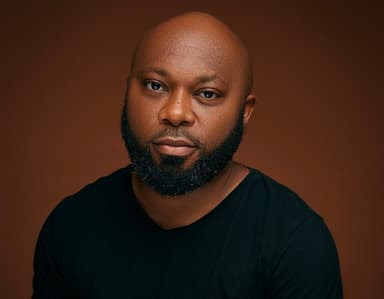
Oluwaniyi Osundare, better known as Niyi Osundare, was born in 1947 in Ikere-Ekiti in present day Ekiti State, Nigeria. He received his education at Amoye Grammar School, Ikere-Ekiti and Christ’s School, Ado-Ekiti, respectively, and thenceforth at the Univeristies of Ibadan, Leeds and York, Toronto, Canada. He is a very resourceful poet, scholar, essayist, artist, playwright and columnist, whose enterprise critiques official corruption and the inhuman subjugation of the less privileged. He began an experimental newspaper poetry column, Songs of the Season in Sunday Tribune in 1985, and deployed it as a quasi real-time creative vehicle to criticise societal ills. He has won several awards in Nigeria and abroad, including the highest academic price in Nigeria, the Nigerian National Oder of Merit, NNOM, in 2014. He has also won the Fonlon/Nicholas Award in 1998, for “Excellence in Literary Creativity, with Significant Contribution to Human Rights in Africa.” Until his relocation to the University of New Orleans in 1997, he was a distinguished Professor of English at the University of Ibadan, where he was a teacher for over two decades.
Olusunle: I recall that the last time I actually had a full length interview with you which was published by the Daily Times in those days of yore, was in 1990. That was 23 years ago! In a manner of speaking, you have become a “grand father” of Nigerian literature, alongside your contemporaries like Femi Osofisan, Tanure Ojaide, Odia Ofeimun, Bode Sowande, Olu Obafemi. Your generation has been succeeded by at least two others, so I think it is just appropriate that I request you to begin by letting the younger generation know who Niyi Osundare is.
Osundare: Good memory! Yes, our last newspaper chat was over two decades ago. In the now (I hate to say) defunct Daily Times! So much has happened since then… “Grand father”? Now, I can see you trying to draw me most mischievously into the “Father-of-African-literature” controversy. I’m sure you know I don’t believe in that kind of primogenitorial fallacy. I see African writers as a family in horizontal terms without filial genuflections and gerontological entitlements. Just human beings plying the trade of the pen. By now you are familiar with my aversion to hierarchical regimentations.
Now, the second part of your question: Well, if this “grand father” has been around long enough to beget two succeeding generations, don’t you think he has been around long enough for these generations to know him without his having to introduce himself? Let these “younger readers” seek and discover who I really am the way I too had/have to discover who Achebe, Soyinka, Okigbo, JP Clark, Mabel Segun, etc are.
Olusunle: Going down the memory lane of literary history, has there always been a nexus between literature across the world and the media?
Osundare: Very much so. Indeed, in 18th century England when the profession we now call journalism was still in its nondescript infancy, literature and journalism enjoyed a very close relationship. The Spectator edited by Addison and Steel was some kind of periodical which focused on London society specifically, but it also thrived on book reviews, publication announcements, literary discourses, literary gossips, and the preoccupation with ‘civilized taste’. It was very much the same with The Tatler. Another ‘mass media’ publication was The Rambler run by the one and only Samuel Johnson, one of the most polyvalently erudite and influential men of letters in English history. Johnson was a poet, novelist, critic, and lexicographer who single-handedly compiled a dictionary of English which he published in 1755. Could the nexus between literature and the mass media have been more purposive, more dramatic than what Johnson made it? We also remember that many of the novels of the famous Charles Dickens were first serialized in newspapers before they were eventually published as novels.
Literature and the media thrive on mass dissemination and the principle of sharing. As I ask rather rhetorically in the opening paragraph of my monograph, ‘Art and Literary Communication in African Literature’, What is art if not communication, the bodying forth of the airy nothing of imagination. . . . ? And as I add later in that paragraph, ‘Art thrives on the urge to share, to make known, and if possible, pass into common currency what once was a private fancy in the agitated flux that is the artist’s mind’. Literature needs the media to ‘hawk’ itself and its ideas; the media need literature to enhance their expressive possibilities and elevate their discourse.
Olusunle: Would you say there was discernible deployment of the media, particularly the print media, for the advancement of literature by the generation before yours?
Osundare: Yes, indeed. Most of what we now refer to as anti-colonial agitational literature made their first appearance in newspapers and periodicals. Consider the newspaper poems of Dennis Osadebay and Nnamdi Azikiwe. Of course, our first generation of writers saw the media as helpmate in their social and literary engagements: Wole Soyinka’s frequent, prolific media interventions; Achebe’s less frequent but no less weighty media appearances. Without a speck of doubt, the advent of television in Nigeria in 1959 was of the greatest advantage to Soyinka’s development and growth as a dramatist. The television brought the genius of this your dramatist and his “1960 Masks,” then later “Orisun Theatre” to the attention of a widening screen audience. The radio served as a good medium for the broadcast of poems, short stories and drama sketches. The Mbari Initiative which served as catalyst for modern written Nigerian literature enjoyed copious publicity in the print media. Ulli Beier, the intrepid catalyst, Soyinka, Okigbo, JP Clark, Demas Nwoko, Aig Higo, etc enjoyed wide and generous coverage from the print media in their Ibadan base and Lagos. (Chinua Achebe was mostly in Lagos, though he was very much part of the Mbari spirit). The world got to know about the works of these pioneer writers primarily through the agency of the media
Olusunle: Scholars of recent Nigerian literature are generally agreed that the 1980’s hallmarked a watershed in the advancement of literature by the print media. What would you say was responsible for this development?
Osundare: Many factors including the rapid increase in the number of universities and suchlike tertiary institutions in Nigeria and the consequent increase in the number of writing, reading graduates; a remarkable increase in the number of aspiring writers, especially poets hungry for a mass outlet readily provided by the print media; increase in the number and quality of the print media (the advent of The Guardian and Newswatch; the virtual rebirth of The Daily Times under Yemi Ogunbiyi’s dynamic leadership); the ‘invasion’ of the print media houses by writers and intellectuals from the universities; the strengthening of the bridge between the classroom and the newsroom. No effort more eloquently illustrates these developments than the emergence of The Guardian’s Perspectives on Nigerian Literature and The Times Review of Ideas and the Arts.
Also worthy of note: The 1980’s witnessed the coming of General Babangida and his Structural Adjustment Policy (SAP) which resulted in the devaluation of the Naira and the nosedive of the entire economic system. One of the casualties was academic journals and magazines. They disappeared, with all their rich and desirable outlets, and the print media took their place as avenues of literary discourse.
Olusunle: Within the period under review, Nigerian literary scholars and writers more or less preferred the editorial boards of our media organizations, to travelling abroad on sabbatical. Femi Osofisan, Yemi Ogunbiyi, Stanley Macebuh, Onwuchekwa Jemie all went to The Guardian for instance. When Ogunbiyi moved over to the Daily Times, Chidi Amuta, G.G Darah, Omar Farouk Ibrahim, Ayo Olukotun, moved over with him. What informed this attraction for the media by writers and intellectuals at the time?
Osundare: A simple but painful answer: thanks to many years of persistent assault by the military, Nigeria’s educational system had all but collapsed in the 80’s (The rout was completed in the 90’s and the country is currently reeling from the trauma!). The university system was the most spectacular victim of that collapse. With the devaluation of the naira went a drastic depletion of the financial and social health of Nigerian academics. To paraphrase a popular ASUU saying, the Nigerian academic’s take-home salary could no longer take him/her home. Unspeakable poverty descended on the campuses and lecturers began to scramble for all kinds of means to survive. Some prostituted themselves for political offices from the military; some prostituted the academic profession by resorting to all kinds of unethical practices such as monetary extortion from the students (who were themselves victims of the same juggernaut); some took to moonlighting on all kinds of odd jobs… But the few ones who had the gift of the pen and a flair for the mass media sought refuge in the media houses. So, in a manner of speaking, the loss of the universities became the gain of the mass media. Of course, this situation raised the standard of intellectual discourse in the media, but this was at a terrible cost to Academe where the new media immigrants rightly belong.
Olusunle: Was this restricted to the “national media” or was there a downstream impact on the provincial press?
Osundare: I believe there was a trickle-down/trickle-over effect on the provincial press, though the influx was felt more in the urban, more established press. Remember: all the agencies of the Nigerian press hunt in the same forest.
Olusunle: In your own view, which aspects of literature: creative writing and literary criticism profited the more from this renewed inter-relationship between literature and the media?
Osundare: Both of them: Creative writing through the appearance in the print media of poems, short stories, and serialized portions of longer fiction; literary criticism through the airing of critical essays, reviews; both of them through authorial interviews and interventions, media publication of book news, etc. From these media publications emerged some cogent, even if not totally even, discourses on Nigerian/African literature. Yemi Ogunbiyi’s initiative in this regard first in The Guardian and later in The Times provides a vital instantiation of this ‘inter- relationship’. The two-volume Perspectives on Nigerian Literature which emerged from this effort remains a reference source on Nigerian literature up to this day. Later, the Post Express ran its own Literary Supplement, as did New Age too. Unfortunately, the literary crops in these supplements were not collected and published as books. Today, virtually every Nigerian print medium of note carries an Arts & Culture section with a lot of attention to literary matters.
Olusunle: You ran a weekly poetry column in Sunday Tribune for several years, which eventually spawned the collection, Songs of the Season. How tasking was it sustaining such a project, from a creative point of view?
Osundare: Don’t talk about Songs of the Season in the past tense for it only rested for a few years, and has been back, since 2004 as Lifelines. One of the sub-themes of Lifelines entitled Random Blues, has run non-stop since December 3, 2006. Random Blues (Volume One) was out in book form a about a year ago. (Steve Shaba’s Kraftbooks). I’m gearing up for Volume Two. I also ran a poetry column Poem of the Month in the now defunct 234NEXT. Long before then, I was a frequent poetry contributor to West Africa, that historic and most valuable ‘publication of record’ that was sent to a premature grave a couple of years ago. (The full story of the killer and undertaker of that very important magazine will be told one day). So my literary intervention in the media is turning out to be a lifelong engagement!
How tasking? Oh you can ask again. You know what it means to produce a poem every week. (Actually, when NEXT was on, I produced two poems in the first Sunday of every month: the once-a-month gig for NEXT, the ‘Sunday-Sunday’ regular for Sunday Tribune). And we are talking not just about publishable poetry, but one that carries my imprint and the mantle of my reputation as one that has been in the creative vineyard for about four decades! And remember, these media poems are in constant competition with the ones that go into my more orthodox, more ‘academic’ books of poetry. As a result I think poetry, drink poetry, eat poetry, sleep poetry, dream poetry, wake up with poetry every day and night. In a nutshell, I LIVE poetry.
Of course, this versiholism (a state of being drunk on verse: forgive the neologism) has its thrills and chills. The thrills: maintaining the poetry column keeps me focused and remorselessly busy all the time; keeps the music of the mind in a state of permanent hum; keeps me constantly aware of the poetic moment; gives me the inestimable joy of the creative epiphany; gives me, yes, a certain measure of relevance through my ability to intrude upon the world by praising virtue and denouncing evil; gives me a lesson in discipline and time-management; schools me in the art of Self- and Other-apprehension; keeps my level of audience-consciousness constantly high by sharpening that mirror through which I perceive myself and the world and vice versa.
And the chills: often times it keeps me too busy for comfort; puts me in a state of emotional and mental overdrive; makes me see too much, think too much, at times thus becoming too sober, too serious, somewhat melancholy. But over and above everything, it keeps me in touch. And that is very important.
Olusunle: I recall you occasionally “donated “that column to upcoming poets. I was one of such beneficiaries. Can you remember some of these younger writers?
Osundare: Thank you for remembering. No mean virtue these days. Yes, it’s been a long time, but I remember fellow travelers such as Ogaga Ifowodo, Ezenwa Ohaeto, Remi Raji, Afam Akeh, Bisi Adeigbo, Chiedu Ezeanah, Nike Adesuyi, Yebo Adamolekun, Frank Ikhimwin, Mark Osama Ighile. And, of course, a young poet called Tunde Olusunle. Maybe unknown to them, I owe an awful lot to the vision, craft, and enthusiasm of these (then) aspiring poets. I am happy to note that many of them have gone ahead to justify the promise they so abundantly demonstrated in those beginning years.
Olusunle: Did this inter-relationship between the media and literature impact on publishing in anyway? I ask this question with peculiar regards to new writers and new works getting published and the evolution of new publishing outfits.
Osundare: Without a doubt. Let me begin with a personal example. The first impression of my poetry on Chief Aigboje Higo came from Songs of the Season, my weekly poetry column in the Sunday Tribune. I will never forget that afternoon in 1984 in the Jericho, Ibadan office of Chief Higo, then Chairman of Heinemann Educational Books, Nigeria, when he told me in words to this effect: I have been reading your poems in the Sunday Tribune week after week, and I must tell you, I like them. I’m amazed at the way you turn out those songs every week. I would like you to consider putting a collection together for Heinemann. We will like to publish you. . . . A week before this meeting, Chief Higo had dispatched one of his staff to me at the University of Ibadan with an invitation to me to see him at my ‘earliest convenience’. That afternoon at Jericho turned out to be a path-finder. I responded to Chief Higo’s invitation with the manuscript of The Eye of the Earth, a slim volume of poetry I had just completed and put away in my desk drawer. Chief Higo sent for me three days after receiving the manuscript… The smile on his face as I entered his office was
reassuring. He held my slim manuscript in his hand, waved it in the air like a magic fan, then went into rhapsodic prophesy: I’ve read your manuscript. The poems are not just good; they will set a new tone for Nigerian poetry in English. Why don’t you add a short preface? This will put the poems in the right perspective and also increase the size of the volume. I did as Chief Higo advised and The Eye of the Earth was born. The book went on to win the Association of Nigerian Authors (ANA) Poetry Prize as well as the Commonwealth Poetry Prize the same year (1986), and has remained one of my most widely read books ever since. It is not likely that I am the only Nigerian writer ‘discovered’ through their media contributions the way it happened between Chief Higo and me.
Olusunle: I picked up a copy of Dialogue with My Country the collection of selections from your Newswatch column between 1985 and 2003. How does it make you feel the reality of the extinction of this pathfinder of contemporary Nigerian magazine journalism? How about the death of Daily Times, Post Express and similar publications?
Osundare: Sad, very sad, the story of the death of these media outfits. For me the fate that befell Newswatch is close to a personal bereavement. Newswatch didn’t only give me a platform and a voice; it brought out of me latent possibilities that I never knew I had. It brought me into contact with friends and colleagues whose relationship I have treasured in the past so many years: Dele Giwa, Ray Ekpu, Dan Agbese, Soji Akinrinade, Bala Dan Abu, Mercy Etteh, May Ellen Ezekiel, Maureen Chigbo, Mike Akpan, Demola Abimboye, Tobs Agbaegbu, Chris Ajaero, Matthew Faji, Conrad Agwu, the Schulz Brothers, etc… And The Daily Times! I’ve never stopped wondering what kind of country would fold its hands and allow a historic institution like The Times to die? The same question I ask about West Africa. The demise of these media icons is a painful pointer to what I have always said: Nigeria is a country that places no premium on lasting values. Thanks to the visionless ones who misrule the land, we are very much people of the moment, the messy moment. The future? Oh leave that to take care of itself. These dead media path-finders have taken so much of us with them. We are still a country in search of valid ways of creating permanent structures, of nurturing institutions.
Tunde Olusunle, poet, journalist, scholar and author, is a “global” Nigerian, who has lived at various times, across the sociocultural span of the country. Born in Kaduna, he attended the iconic Immaculate Conception College, (ICC), in Benin City, graduating in 1980. He obtained the Cambridge University- moderated Higher School Certificate, (HSC), from the School of Basic Studies, Kwara State College of Technology, Ilorin in 1982. He earned a first degree in English from the University of Ilorin in 1985, and a masters in Literature in 1989. Olusunle participated in the mandatory one-year year National Youth Service Corps, (NYSC), in Owerri, between 1985 and 1986.
He taught in secondary schools in modern day Kogi and Kwara states from 1986 to 1990, before joining the Daily Times conglomerate in Lagos, in 1990. Olusunle rose to the membership of the Editorial Board of the erstwhile pacesetter of the Nigerian print media, and savoured stints in the Kogi State public service, between 1992 and 1997. He was information, public affairs and media director to three chief executives of the state, of the military and civilian hue. He was also media officer to Nigeria’s former military leader, Olusegun Obasanjo, beginning from the earliest days of his presidential campaign in 1998. He was subsequently one of his principal aides from 1999 to 2007.
Olusunle has published three very successful poetry volumes: Fingermarks, (1996); Rhythm Of The Mortar, (2001) and A Medley Of Echoes, (2022). He also authored a compendium of essays on Obasanjo, On The Trail Of History: A Reporter’s Notebook on Olusegun Obasanjo, (2006) and a similar anthology on Nigeria’s former Vice President, Atiku Abubakar titled: Atiku: Perspectives on a Phenomenon, (2023). In 2024, he released two volumes of essays titled: Orisirisi: Vistas on Contemporary Politics in Nigeria and Toasts, Tributes and Wreaths. He is an Adjunct Professor of Creative Writing at the University of Abuja, where he previously obtained a doctorate in Media Arts. He has visited an impressive 30 countries across time and space.